You Don’t Just Fit Your World—You Help Build It

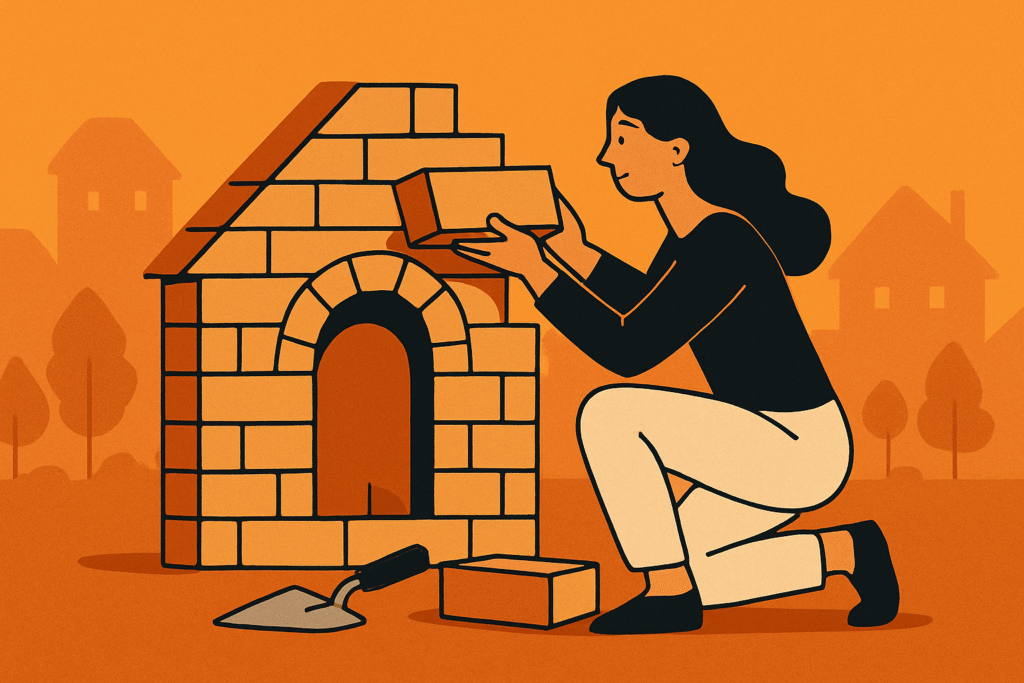
Imagine fixing up your room before exam week. You clear the desk, pin a schedule on the wall, and set a water bottle by your chair. A few days later, you’re studying longer, taking fewer breaks, and even sleeping better. Your tiny redesign didn’t just make the room nicer—it changed how you behave. Odling-Smee, Laland, and Feldman employ a similar concept for living things: organisms not only adapt to their surroundings, but also alter those surroundings in ways that matter for the future. They call this “niche construction,” and it means life is a two-way street between creatures and the environments they help shape.

According to the authors, animals and plants are constant remodelers. Worms mix and move soil so much that they alter its structure and chemistry over generations. Social insects build nests that later push the evolution of behaviors for keeping those nests safe, clean, and at the right temperature. Even plants tweak the world by shifting soil nutrients, humidity, or fire patterns, and some species evolve to rely on the very conditions they helped create. In everyday terms, it’s like generations of students leaving better notes, habits, or clutter for the next class—what’s left behind shapes what’s likely to happen next.

This remodeling has consequences that go beyond genes alone. Parents and ancestors can pass down “ecological inheritance”—not just DNA, but altered surroundings that change what traits are useful. Think of a cuckoo laying eggs in a host’s nest: that parental choice hands the chick a different set of challenges and advantages, which can steer which traits thrive. Sometimes there’s a delay: one set of genes changes the environment first, and only later do other genes catch up, creating “evolutionary momentum.” There are also indirect gene interactions: what one species does can change how another’s genes show up, like worms improving soil in ways that boost plant growth. For a human-scale analogy, a campus that adds more bike lanes may, over time, favor students who invest in cycling gear and habits—choices today shaping which skills and tools pay off tomorrow.

The big takeaway is practical: shaping your surroundings is part of shaping yourself. The authors even note that learned and cultural behaviors can initiate new selection pressures—such as birds learning to open milk bottles, which could make digestive or learning traits more valuable. Mutual “win-wins” can also start as by-products: animals that spread seeds while eating fruit help plants, nudging both sides to lean into the partnership. In daily life, curate your “niche” on purpose: set up study spaces that invite focus, pick routines that make healthy choices the easy default, and build group norms that future-you will inherit. Adaptation isn’t only about coping with what’s out there; it’s also about the feedback loops you create through what you build, protect, and pass on.

Reference:
Odling-Smee, F. J., Laland, K. N., & Feldman, M. W. (1996). Niche Construction. The American Naturalist, 147(4), 641–648. https://doi.org/10.1086/285870

Smart Cities, Simple Choices: Why Your Daily Habits Matter

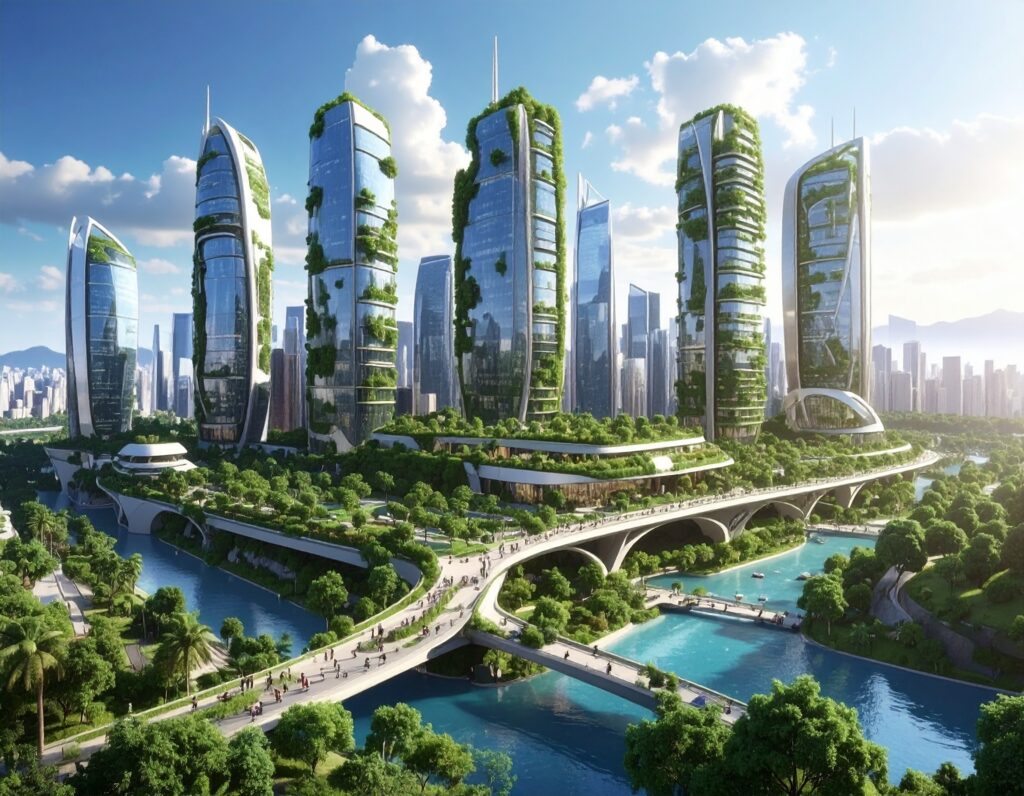
Think of a city as a living group chat. Every person sends signals—moving to a new neighborhood, getting a job, turning on a tap—and together those signals shape what the city becomes. Marquez et al. explain that researchers use simulations to test “what if?” ideas without risking real neighborhoods or budgets, pulling info from places like population counts, job surveys, and local water utilities to see the full picture of how a city grows. This approach combines big-picture math with street-level behavior: top-down models track overall trends, while bottom-up “agents” simulate everyday choices; cellular automata provide the map, illustrating how land use changes block by block. It sounds techy, but the idea is simple: small decisions add up fast.

Sustainability is the goal that keeps the chat from turning into chaos. It means balancing what people want today with what the city needs tomorrow across society, the economy, and nature. It is not perfection; it’s a direction. In practice, this can manifest as more effective public spending. For example, judging a water project solely by who can pay misses the bigger win—fewer illnesses, more time in school or at work, and a better quality of life for everyone. When planners compare the benefits and the hidden costs—such as traffic, pollution, and even crime—they get closer to making fair, long-term choices.

The case of Ciudad Juárez shows why this matters. The city is situated in a dry region, so most of its drinking water comes from an underground aquifer, rather than a river. For years, pumping has outpaced natural recharge by roughly five to one, meaning demand keeps draining the aquifer faster than rain can refill it. The team’s model warns that if this pattern holds, the aquifer will not meet the city’s needs in about two decades. Jobs also draw people in, which increases demand for housing, services, and—yes—more water, creating a loop that planners must manage with care.

So where do you fit in? Your choices ripple. Shorter showers and fixing leaks are obvious wins in a dry city, but so is supporting policies that fund basic services, because the benefits come back to you in improved health, increased time, and greater opportunities. Paying attention to how you move (carpooling, biking, or using transit), where you live, and where you work helps keep that group chat from overheating with traffic and pollution. And when you hear about “models” or “agents,” don’t tune out. These tools exist to make everyday life smoother, not more complicated. The message from Marquez et al. is clear: when we balance people, jobs, and nature—and when our individual actions align with smart plans—the city becomes stronger for everyone.

Reference:
Marquez, B. Y., Castañon-Puga, M., Castro, J. R., & Suarez, E. D. (2010). On the Modeling of a Sustainable System for Urban Development Simulation Using Data Mining and Distributed Agencies. In G. Kou, Y. Peng, F. I. S. Ko, Y.-W. Chen, & Tomoko Tateyama (Eds.), 2nd International Conference on Software Engineering and Data Mining (1st ed., Issues 23-25 June 2010, pp. i–xvi). IEEE.

Simulating a City: How Computers Help Us Build Fair, Livable Places

When a city grows, it’s not just more people and buildings. It’s traffic, jobs, rents, parks, water, and the invisible rules tying them together. Marquez et al. explain how social simulation allows us to “test-drive” city decisions on a computer, rather than in real life, where mistakes are costly. They combine three tools that fit like puzzle pieces: dynamic systems to visualize big-picture trends over time, multi-agent systems to observe how many independent “actors” (such as households, firms, or agencies) interact, and cellular automata to map those changes on a grid that resembles an actual city. Put simply, it’s top-down, bottom-up, and on-the-map thinking working together, allowing us to explore what might happen before it actually occurs (Marquez et al., 2010).

Sustainability sits at the center of this approach. The authors describe it as aiming for a good life today without wrecking tomorrow, balancing social needs, the economy, and the environment. In cities, this means tracking how population growth and migration can boost innovation and services, but also bring congestion, unemployment, or pollution if planning is done poorly. Markets set many prices and wages, yet they don’t always account for “externalities,” like dirty air or clogged roads. That’s why planners use cost–benefit thinking that values public health and well-being, not just bills and fees. An easy example is water and sanitation: the benefits include fewer illnesses and more productive days, which matter even if a simple price tag doesn’t capture them all (Marquez et al., 2010).

To illustrate this, Marquez et al. examine Ciudad Juárez. It’s a fast-growing, desert-climate city where water demand rises with population and industry. Most drinking water comes from the Bolsón del Hueco aquifer, and extraction has exceeded natural recharge several times. Residential users account for the largest share of water, with commercial, industrial, and public uses making up the remainder. The authors simulate these pressures with NetLogo and find a worrying pattern: if current trends continue, the aquifer’s supply won’t meet the city’s needs within about two decades. Growth also ties the city to larger economic cycles because it serves as a border hub, which can amplify booms and downturns (Marquez et al., 2010).

Why should young people care? Because everyday choices connect to these systems. Taking a job across town can significantly impact travel patterns. Choosing where to live changes the demand for services. Supporting smarter water use and fair public investments helps your neighborhood stay healthy and affordable. The big message is hopeful: complex doesn’t mean helpless. By simulating cities as living systems—encompassing people, money, and nature together—we can test ideas, identify side effects, and strive for a city that functions effectively in real life, not just on paper (Marquez et al., 2010).

Reference:
Marquez, B. Y., Castañón-Puga, M., & Suarez, E. D. (2010). On the Simulation of a Sustainable System Using Modeling Dynamic Systems and Distributed Agencies. In 2010 6th International Conference on Networked Computing (INC) (1st ed., pp. 1–5). IEEE.