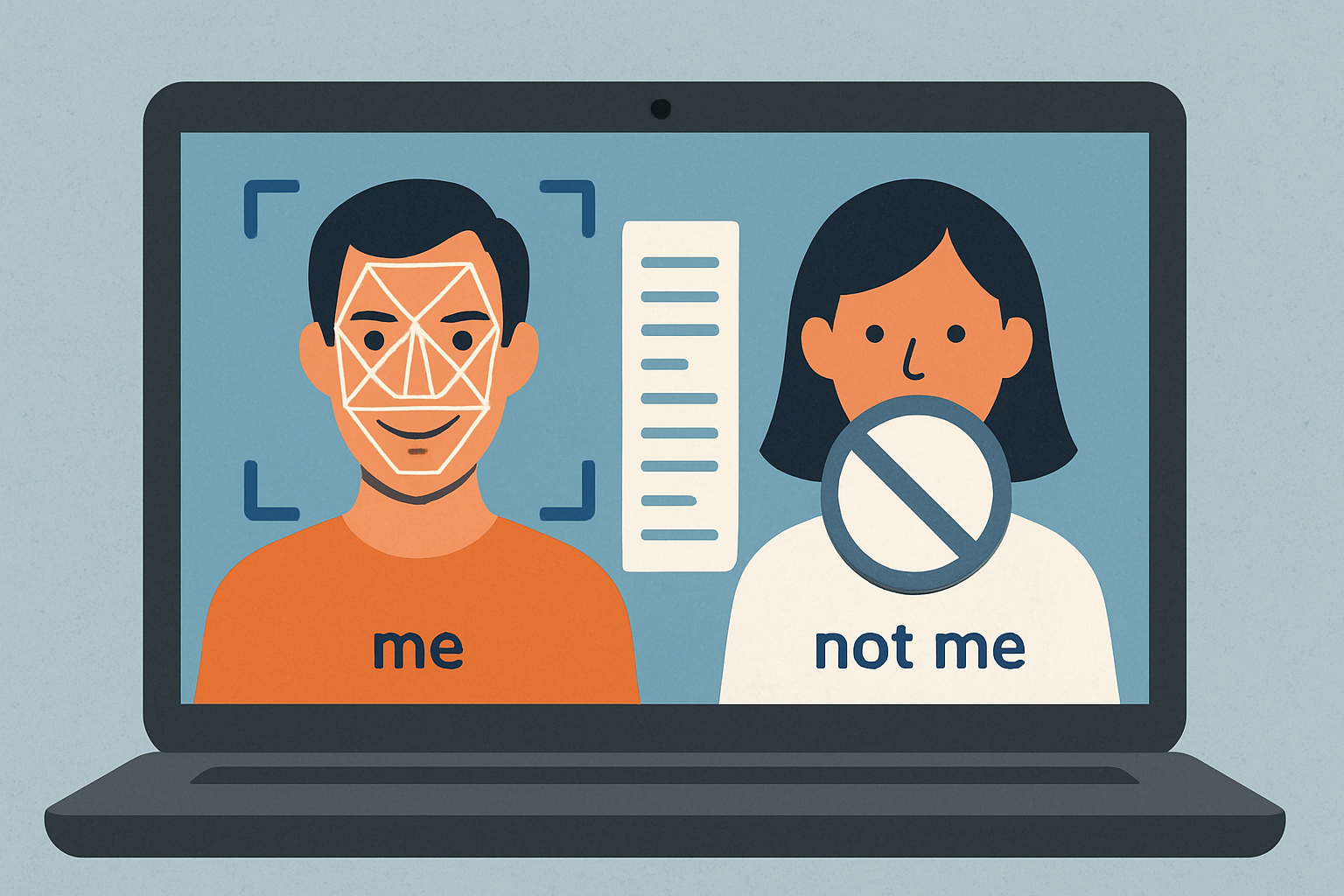
How Your Computer Can Tell “Me” from “Not Me”

You open your laptop, and a familiar app feels off. It launches slower. A button is gone. Is it just a glitch, or did something actually change? Forrest and colleagues suggest a simple way to think about this: teach the computer what “self” looks like, then watch for anything that isn’t “self.” Their idea borrows from the immune system, turning change detection into a game of “spot the difference.” Instead of chasing every known virus pattern, the system learns your files when they’re clean and flags anything that doesn’t match that clean picture.

Here’s how it works, in everyday terms. Take a file you want to protect and slice it into many small pieces, like cutting a playlist into short clips. Then generate lots of random “detectors,” but immediately throw away any detector that looks too much like your file pieces. That pruning step is called “censoring.” What’s left is a customized set of detectors that match almost anything except your file. Later, the computer regularly compares your file pieces to those detectors; if one suddenly matches, something changed, and you get an alert. The matching rule is flexible: it doesn’t need a perfect match, only a few symbols in a row, which makes it sensitive to real edits. This approach is best suited for items that shouldn’t change often, and it won’t detect pure deletions, which is a known limitation.

The clever twist is probability. Each computer (or app) builds a unique detector set, so even if an attacker slips past one, the same trick is likely to fail elsewhere. System-wide reliability ends up high, even if any single spot is only “pretty good.” You can tune how cautious the system is: more detectors cost more to prepare but provide stronger protection, while day-to-day checking remains inexpensive. Experiments in the paper demonstrate the idea’s ability to catch everything from minor edits to simple file-infecting viruses, and detection improves rapidly when multiple independent copies are involved. Protection is also symmetric: if someone tries to tamper with the detectors themselves, the same checking process detects that change as well.

What does this mean for your daily life? Think of it as a mindset: know your “self,” then watch for drift. When you install software or store important notes, taking a clean snapshot and checking against it later can reveal sneaky changes early. You can also spread the checking across multiple locations—such as a laptop, cloud copy, or external drive—to achieve that system-level boost from diversity. The authors are honest about trade-offs: generating a strong detector set can be computationally intensive, and attackers could try tricks like reusing their own pieces, so varying how you slice things raises the bar. The bottom line is motivating: by learning “me” first and automating the “is this still me?” question, you gain a practical, immune-inspired way to keep your digital content trustworthy without getting bogged down in technical jargon.

Reference:
Forrest, S., Perelson, A. S., Allen, L., & Cherukuri, R. (1994). Self-nonself discrimination in a computer. Proceedings of 1994 IEEE Computer Society Symposium on Research in Security and Privacy, 202–212. https://doi.org/10.1109/RISP.1994.296580

Privacy Notice & Disclaimer:
This blog provides simplified educational science content, created with the assistance of both humans and AI. It may omit technical details, is provided “as is,” and does not collect personal data beyond basic anonymous analytics. For full details, please see our Privacy Notice and Disclaimer. Read About This Blog & Attribution Note for AI-Generated Content to know more about this blog project.

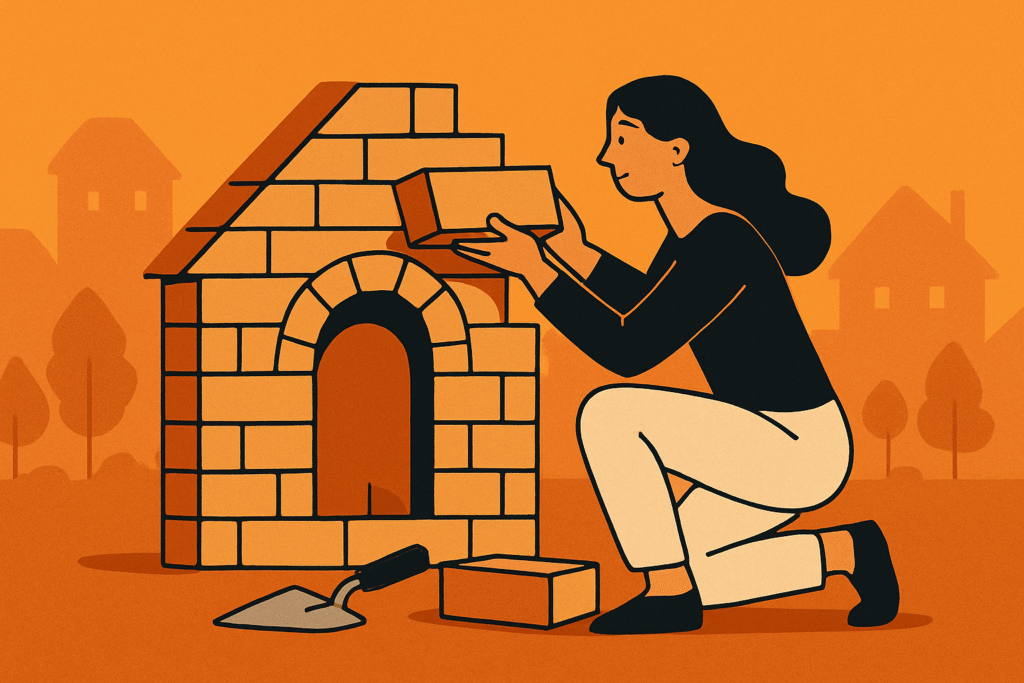
Taming Information Chaos with a Two-Number Trick

You open your phone to study and see a mess: 200 screenshots, 40 notes, five half-finished playlists, and a dozen tabs about “how to learn faster.” It feels random and overwhelming. Yet some parts repeat—your class schedules, the way you name files, your favorite study playlist order. Murray Gell-Mann and Seth Lloyd suggest a simple way to think about this mix of pattern and noise: separate what’s regular from what’s random, then measure both. In their view, “information” isn’t just messages or data—it’s also the uncertainty you still have. That’s why the same math that measures entropy in physics also measures surprise in messages, and in everyday choices like a coin flip. When all outcomes are equally likely, that uncertainty is highest; when you’ve seen the answer, uncertainty drops to zero.

Here’s the trick. First, describe the regular parts of your world as compactly as possible—the rules, templates, and habits you actually use. In the authors’ terms, that compact description is called effective complexity, and it’s the length of the shortest “program” that captures your recognized regularities. Think of it like the few lines you’d write to describe your note-taking system or playlist rules. Second, add a number for what’s left over—the unpredictable bits you can only label with probabilities. Add those two numbers and you get total information: “regularities length” plus “randomness left.” That sum is what it really takes to describe your situation. When you compare different ways of spotting patterns, the best choice is the one that makes the total information smallest, and then, given that, makes your regularities description as short as possible within a reasonable computing time. In plain terms: pick patterns that both explain a lot and are easy to use.

What does that look like on a busy day? Suppose your lecture notes often follow the same outline. Writing a short template (headings, quick symbols, highlight colors) encodes those regularities. That’s your effective complexity. The unexpected parts—off-syllabus examples, a surprise quiz—are the random remainder. Your goal is to choose a template that keeps the total low: simple enough to apply fast, specific enough that less is left to chance. The authors demonstrate the same logic with coin-toss sequences and even with recognizing the digits of π: a concise, insightful description can transform what initially appears random into something far easier to comprehend. In the π case, once you spot the rule, you trade randomness for a slightly richer description, and the overall effort drops. In study life, that’s like replacing “save everything and hope” with a tiny rule set that makes new material land in the right place automatically.

There’s also a helpful mindset for uncertainty itself. When you don’t know details, don’t pretend you do; assign fair weights and move on—what statisticians call “maximum entropy.” That keeps your randomness honest while you continue to refine the patterns. In practice, shrink your regularities until they’re easy to compute (templates you can apply quickly), and let the leftovers be labeled as “to triage later.” As Gell-Mann and Lloyd argue, any process that lowers total information makes a system easier to understand and control, whether it’s a physics model or your week. So next time your phone feels like chaos, write the tiniest rule that explains most of your flow, and let chance have the rest. You’ll spend fewer bits on confusion—and more on getting things done.

Reference:
Gell-Mann, M., & Lloyd, S. (1996). Information measures, effective complexity, and total information. Complexity, 2(1), 44–52. https://doi.org/10.1002/(SICI)1099-0526(199609/10)2:1<44::AID-CPLX10>3.0.CO;2-X

Privacy Notice & Disclaimer:
This blog provides simplified educational science content, created with the assistance of both humans and AI. It may omit technical details, is provided “as is,” and does not collect personal data beyond basic anonymous analytics. For full details, please see our Privacy Notice and Disclaimer. Read About This Blog & Attribution Note for AI-Generated Content to know more about this blog project.
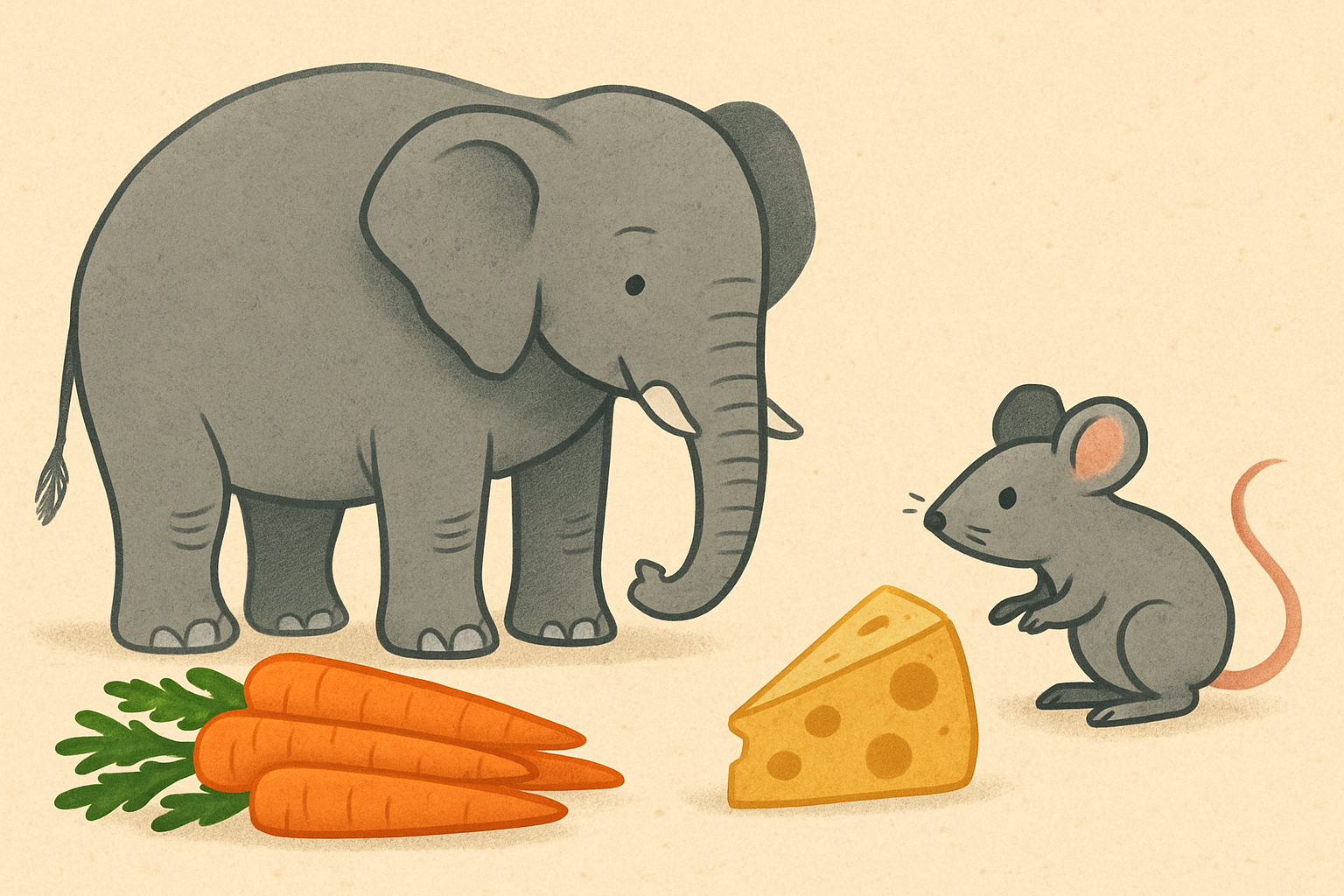
You Don’t Just Fit Your World—You Help Build It

Imagine fixing up your room before exam week. You clear the desk, pin a schedule on the wall, and set a water bottle by your chair. A few days later, you’re studying longer, taking fewer breaks, and even sleeping better. Your tiny redesign didn’t just make the room nicer—it changed how you behave. Odling-Smee, Laland, and Feldman employ a similar concept for living things: organisms not only adapt to their surroundings, but also alter those surroundings in ways that matter for the future. They call this “niche construction,” and it means life is a two-way street between creatures and the environments they help shape.

According to the authors, animals and plants are constant remodelers. Worms mix and move soil so much that they alter its structure and chemistry over generations. Social insects build nests that later push the evolution of behaviors for keeping those nests safe, clean, and at the right temperature. Even plants tweak the world by shifting soil nutrients, humidity, or fire patterns, and some species evolve to rely on the very conditions they helped create. In everyday terms, it’s like generations of students leaving better notes, habits, or clutter for the next class—what’s left behind shapes what’s likely to happen next.

This remodeling has consequences that go beyond genes alone. Parents and ancestors can pass down “ecological inheritance”—not just DNA, but altered surroundings that change what traits are useful. Think of a cuckoo laying eggs in a host’s nest: that parental choice hands the chick a different set of challenges and advantages, which can steer which traits thrive. Sometimes there’s a delay: one set of genes changes the environment first, and only later do other genes catch up, creating “evolutionary momentum.” There are also indirect gene interactions: what one species does can change how another’s genes show up, like worms improving soil in ways that boost plant growth. For a human-scale analogy, a campus that adds more bike lanes may, over time, favor students who invest in cycling gear and habits—choices today shaping which skills and tools pay off tomorrow.

The big takeaway is practical: shaping your surroundings is part of shaping yourself. The authors even note that learned and cultural behaviors can initiate new selection pressures—such as birds learning to open milk bottles, which could make digestive or learning traits more valuable. Mutual “win-wins” can also start as by-products: animals that spread seeds while eating fruit help plants, nudging both sides to lean into the partnership. In daily life, curate your “niche” on purpose: set up study spaces that invite focus, pick routines that make healthy choices the easy default, and build group norms that future-you will inherit. Adaptation isn’t only about coping with what’s out there; it’s also about the feedback loops you create through what you build, protect, and pass on.

Reference:
Odling-Smee, F. J., Laland, K. N., & Feldman, M. W. (1996). Niche Construction. The American Naturalist, 147(4), 641–648. https://doi.org/10.1086/285870

Privacy Notice & Disclaimer:
This blog provides simplified educational science content, created with the assistance of both humans and AI. It may omit technical details, is provided “as is,” and does not collect personal data beyond basic anonymous analytics. For full details, please see our Privacy Notice and Disclaimer. Read About This Blog & Attribution Note for AI-Generated Content to know more about this blog project.
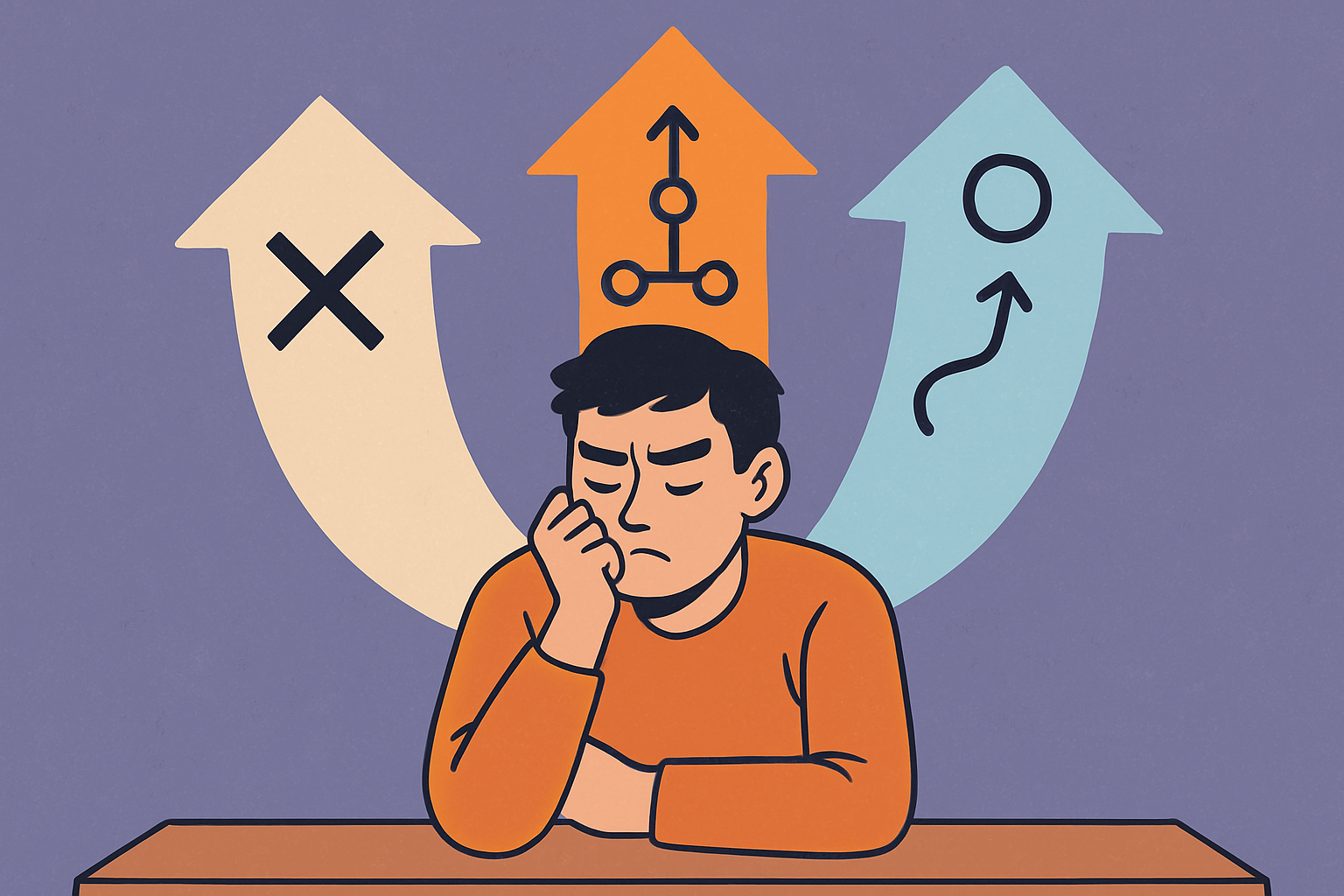
Why Big Animals Eat Less (Per Kilo) And Other Weird-But-True Body Rules

Ever wonder why a mouse seems to snack nonstop while an elephant can take its time? West, Brown, and Enquist explain that many things in living creatures follow simple size rules. As animals grow larger, their total energy use increases, but not at the same rate as their body mass. That’s why a small pet burns way more energy per kilogram than you do. Heartbeats and breaths follow the same pattern: smaller bodies tick faster, while bigger bodies tick slower. Even though long things, such as circulating blood or growing, tend to stretch with size.

The reason sits inside our plumbing. Life runs on networks of branching tubes that reach everywhere: your arteries and airways, the veins in a leaf, even the tiny pipes in an insect. These networks spread out like a fractal tree, splitting and splitting until they reach the tiniest units that actually do the job—capillaries in us, alveoli in lungs, fine vessels in plants. According to the authors, the end units remain approximately the same size across species, and the entire network is designed to utilize as little energy as possible. From those simple ideas, the size rules just… fall out.

This helps make sense of everyday stuff. A hamster needs frequent meals because its fast-beating heart and speedy breathing burn fuel quickly, while a cow can graze slowly because its network moves resources more calmly. Blood pressure stays about the same across sizes, but total blood volume scales with body size, so bigger animals carry more fuel on board. Lungs fit the story too: as bodies grow, the number of tiny air sacs increases a lot, but each sac’s size changes only a little. The result is a huge total surface for gas exchange without wasting energy pushing air around.

Once you notice these patterns, you see them everywhere. Tree trunks and aortas expand in size in a similar manner. Tiny creatures live life in fast-forward, big ones in slow motion, because their delivery networks set the pace. You don’t need equations to use this idea: it’s enough to remember that branching networks plus smart energy use create smooth scaling rules. That’s why animals of all sizes—from shrews to whales—play by the same hidden design, just at different speeds.

Reference:
West, G. B., Brown, J. H., & Enquist, B. J. (1997). A General Model for the Origin of Allometric Scaling Laws in Biology. Science, 276(5309), 122–126. https://doi.org/10.1126/science.276.5309.122

Privacy Notice & Disclaimer:
This blog provides simplified educational science content, created with the assistance of both humans and AI. It may omit technical details, is provided “as is,” and does not collect personal data beyond basic anonymous analytics. For full details, please see our Privacy Notice and Disclaimer. Read About This Blog & Attribution Note for AI-Generated Content to know more about this blog project.

Why There’s No “Best” Strategy (and How to Pick One That Fits You)

We all love shortcuts. The perfect study hack. The ultimate workout plan. The “best” way to search for answers online. Wolpert and Macready show that this dream has a catch: there’s no single method that wins across every kind of problem. When you average over all possible situations, every strategy performs the same. If one approach excels in some tasks, it must falter in others. Even a random strategy can look just as good—on average—if you judge it across every problem out there.

So what actually works? Match the method to the kind of problem you face. The authors explain this as “alignment.” Think of it like playlists. A gym playlist pumps you up, but it’s awful for falling asleep. In the same way, an algorithm—or any plan—needs to fit the pattern of the task. If you know something about your problems (for example, your homework tends to be practice-with-small-twists, not total curveballs), build your approach around that. Without using what you know, you’re basically picking at random and hoping for luck.

Life also changes while you’re working. Projects shift, goals change, and new information arrives midway. The same “no free lunch” idea still bites in these time-varying situations: after the very first step, no fixed approach dominates across all possible ways things can change. What helps is paying attention to how your world usually shifts. If your schedule becomes busy near exams, use strategies that adapt—such as quick checkpoints and backups—rather than rigid plans that assume nothing will change.

One more practical warning: don’t overhype wins from tiny tests. The authors demonstrate that outperforming another method on a small set of examples doesn’t prove much; it only indicates that you were better in those specific cases. Instead, track results over the kinds of tasks you actually face, and compare to simple baselines. If your fancy routine isn’t clearly better than a plain, honest approach, rethink it. In short, there’s no universal champion. But by learning the shape of your own problems and choosing tactics that match that shape, you turn “no free lunch” into a recipe that works for your everyday life.

Reference:
Wolpert, D. H., & Macready, W. G. (1997). No Free Lunch Theorems for Optimization. In IEEE Transactions on Evolutionary Computation (Vol. 1, Issue 1). doi: 10.1109/4235.585893

Privacy Notice & Disclaimer:
This blog provides simplified educational science content, created with the assistance of both humans and AI. It may omit technical details, is provided “as is,” and does not collect personal data beyond basic anonymous analytics. For full details, please see our Privacy Notice and Disclaimer. Read About This Blog & Attribution Note for AI-Generated Content to know more about this blog project.