
Learn Faster with the “Natural” Gradient

When you’re learning something new, you don’t just step randomly—you look for the path that gets you downhill fastest. Amari explains that many machine-learning models live on curved spaces, so the usual gradient doesn’t actually point straight “down.” The fix is the natural gradient, which adjusts each step to the true shape of the space so updates follow the steepest descent where it really matters. In simple terms, the algorithm stops slipping sideways and starts moving directly toward better settings. This idea originates from information geometry and applies to perceptrons, mixing-matrix problems such as blind source separation, and even linear dynamical systems used for deconvolution, not just toy examples.

Why care? Because using the natural gradient in online learning (updating as each new example arrives) can be as accurate, in the long run, as training with all data at once. Statistically, Amari shows this reaches “Fisher efficiency,” which means the online method eventually matches the gold-standard batch estimator instead of settling for second best. For everyday intuition, think of studying a little every day and still getting the same score as if you’d crammed with the full textbook—provided you study in the smartest direction.

This smarter direction can also dodge the annoying “plateaus” that slow standard backprop training, where progress feels stuck even though you’re doing everything “right.” By respecting the curvature of the model’s parameter space, natural-gradient steps help the learner escape these flat regions more readily, speeding up practical training of neural networks. Amari highlights this benefit while positioning the method across common tasks, from multilayer perceptrons to separating mixed signals, such as voices in a room or unmixing time-smeared audio.

There’s also a tip for tuning your learning rate without guesswork. The paper proposes an adaptive rule that makes big steps when you’re far from the goal and smaller steps as you get close, helping you converge quickly without overshooting. It’s like running on open ground but slowing near the finish line to avoid slipping past it. This adaptive schedule aligns naturally with the natural gradient, offering a practical approach that can be applied in real-world training loops.

Reference:
Amari, S. (1998). Natural Gradient Works Efficiently in Learning. Neural Computation, 10(2), 251–276. https://doi.org/10.1162/089976698300017746

Privacy Notice & Disclaimer:
This blog provides simplified educational science content, created with the assistance of both humans and AI. It may omit technical details, is provided “as is,” and does not collect personal data beyond basic anonymous analytics. For full details, please see our Privacy Notice and Disclaimer. Read About This Blog & Attribution Note for AI-Generated Content to know more about this blog project.
How Markets Quietly Shape What We Want

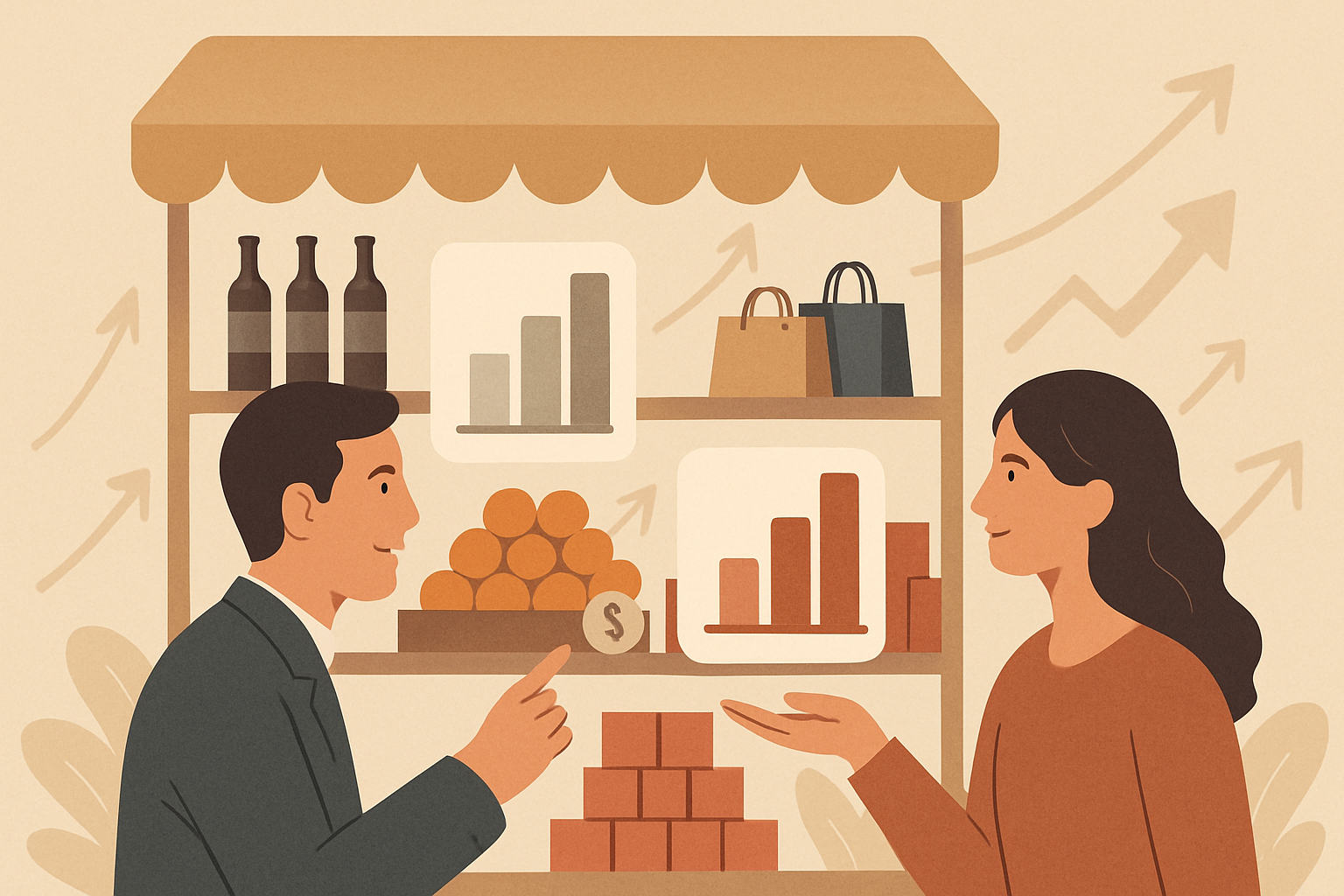
We often think our tastes and values are purely personal, but Bowles argues that everyday systems—like shops, apps, schools, and jobs—nudge them all the time. Markets don’t just set prices; they set the scene. Paying taxes for a service feels different from buying the same thing yourself. One frames you as a citizen with rights; the other as a customer engaging in a transaction. That frame alters how fair something appears and how generous we perceive it to be. In lab games, people offered less when the situation was described like a market “exchange” and more when it felt like “splitting a pie.” Even money itself can be a powerful simplifier. In older communities studied by Bohannan, certain items weren’t traded across categories. As money spread, more items became comparable, and that changed what felt OK to swap—and what a “good life” looked like.

Motivation shifts, too. When we do things for a reward, we often start liking the activity less. Psychologists such as Deci and Ryan have demonstrated that paying or punishing can crowd out pride, curiosity, and the sense of choice. Bowles reviews real-world hints of this: when people were offered cash to accept an unpopular facility in their town, support fell; paying for blood donation sometimes made willing donors less likely to give. The takeaway isn’t “money bad.” It’s subtler: clear quid-pro-quo deals push us to focus on the payoff, while choice and autonomy keep our inner drive alive. In your daily life, that might mean mixing paid gigs with passion projects, or keeping some hobbies reward-free so they stay fun.

Norms and reputations also depend on the setting. In tight communities or teams where you’ll meet again, being trustworthy pays off. In fast, anonymous markets, identity matters less, so it’s harder for reputations to grow—and easier to act only for yourself. But market life isn’t destiny. Simple tweaks—such as talking face-to-face, showing names, or building group identity—can increase cooperation. Consider how you buy and sell online: profiles, reviews, and repeat interactions make kindness and reliability more prevalent, as your behavior now follows you later.

Finally, we learn what to value from the people around us. Bowles demonstrates that culture spreads vertically (from parents), obliquely (through teachers and creators), and horizontally (among friends). Conformity isn’t always mindless; it can be a smart shortcut when learning is costly. That’s why “what everyone does” is so sticky. Markets can shift who we see, what gets praised, and which paths look successful—so the role models change, and so do we. For everyday life, the message is empowering: choose your frames and your crowds. Decide which activities you’ll keep intrinsic. Build circles where your future self will meet you again. Small design choices—how you pay, how you participate, who you follow—quietly train your preferences. Use them on purpose.

Reference:
Bowles, S. (1998). Endogenous Preferences: The Cultural Consequences of Markets and Other Economic Institutions. Journal of Economic Literature36(1), 75–111. http://www.jstor.org/stable/2564952

Privacy Notice & Disclaimer:
This blog provides simplified educational science content, created with the assistance of both humans and AI. It may omit technical details, is provided “as is,” and does not collect personal data beyond basic anonymous analytics. For full details, please see our Privacy Notice and Disclaimer. Read About This Blog & Attribution Note for AI-Generated Content to know more about this blog project.
The “Middle Way” of Nature: Where Big Patterns Come from Small Parts

We’re often told that if you know the tiny rules, you can predict everything. But that’s not how the world always works. Laughlin et al. argue that when lots of pieces come together, new patterns appear that don’t depend on every little detail. They call these “protected” behaviors—stable, reliable patterns, such as magnetism or superfluid flow — that appear repeatedly across different materials. You can’t easily compute them by tracking every atom; instead, you spot them by looking for the collective rules that emerge when many parts interact. In other words, between the world of atoms and the everyday world, there’s a “middle” zone where organization pops up on its own.

This middle zone shows up in living things and in everyday materials. Proteins don’t just sit there; they fold into useful shapes, pick out the right molecules to work with, and even team up to build structures—like a tiny construction crew that knows the plan. Glasses—think phone screens or plastic—can “age,” remember, and change slowly even when their atoms don’t look very different under x-rays. Soap-like molecules naturally form into bubbles and membranes, much like cell walls. And in some electronic materials, charges arrange themselves into stripes or domains that behave in surprising ways. All of this says the same thing: when enough pieces interact, they organize, and the result can be smarter than any single part.

How does this organization happen? One helpful picture is the “energy landscape.” Imagine a map of hills and valleys that indicates which shapes or arrangements are easier or harder for a system to reach. Some landscapes are rugged, with many similar valleys, so the system can get stuck in different long-lived states. Others are like a funnel that guides you toward one best shape—this is how many natural proteins fold quickly and reliably, because their landscapes gently steer them to the right place. Another big idea is “frustration,” which occurs when different forces want different things at the same time, such as in a group project with conflicting goals. That conflict can create patterns—such as domains, droplets, or stripes—as a compromise. Seeing problems this way helps you expect slow changes, memory effects, and multiple outcomes, rather than a single perfect answer.

Why should you care? These ideas make everyday choices easier. When a task involves many moving parts—planning an event, training a team, organizing your study schedule—don’t expect one tiny tweak to predict everything. Look for the protected patterns: routines that stay stable even when details change. Build funnels: set up habits and checklists that guide you toward the good outcome from many starting points. Expect frustration: competing goals will create trade-offs, so design simple “rules of thumb” everyone can follow. And be patient with “aging” and “memory”: systems often change slowly, keep history, and need time to reorganize. Scientists are developing new tools to see this middle world more clearly—like advanced microscopes and smart scattering methods—because understanding these rules won’t just explain cells and materials; it could help us design artificial systems that adapt and learn. That mindset can help you build projects, communities, and even personal routines that work with complexity instead of fighting it.

Reference:
Laughlin, R. B., Pines, D., Schmalian, J., Stojkovic, B. P., & Wolynes, P. (1999). The middle way. Proceedings of the National Academy of Sciences (PNAS), 97(1), 32–37. https://doi.org/10.1073/pnas.97.1.32

Privacy Notice & Disclaimer:
This blog provides simplified educational science content, created with the assistance of both humans and AI. It may omit technical details, is provided “as is,” and does not collect personal data beyond basic anonymous analytics. For full details, please see our Privacy Notice and Disclaimer. Read About This Blog & Attribution Note for AI-Generated Content to know more about this blog project.

How We Actually Get Things Done Together

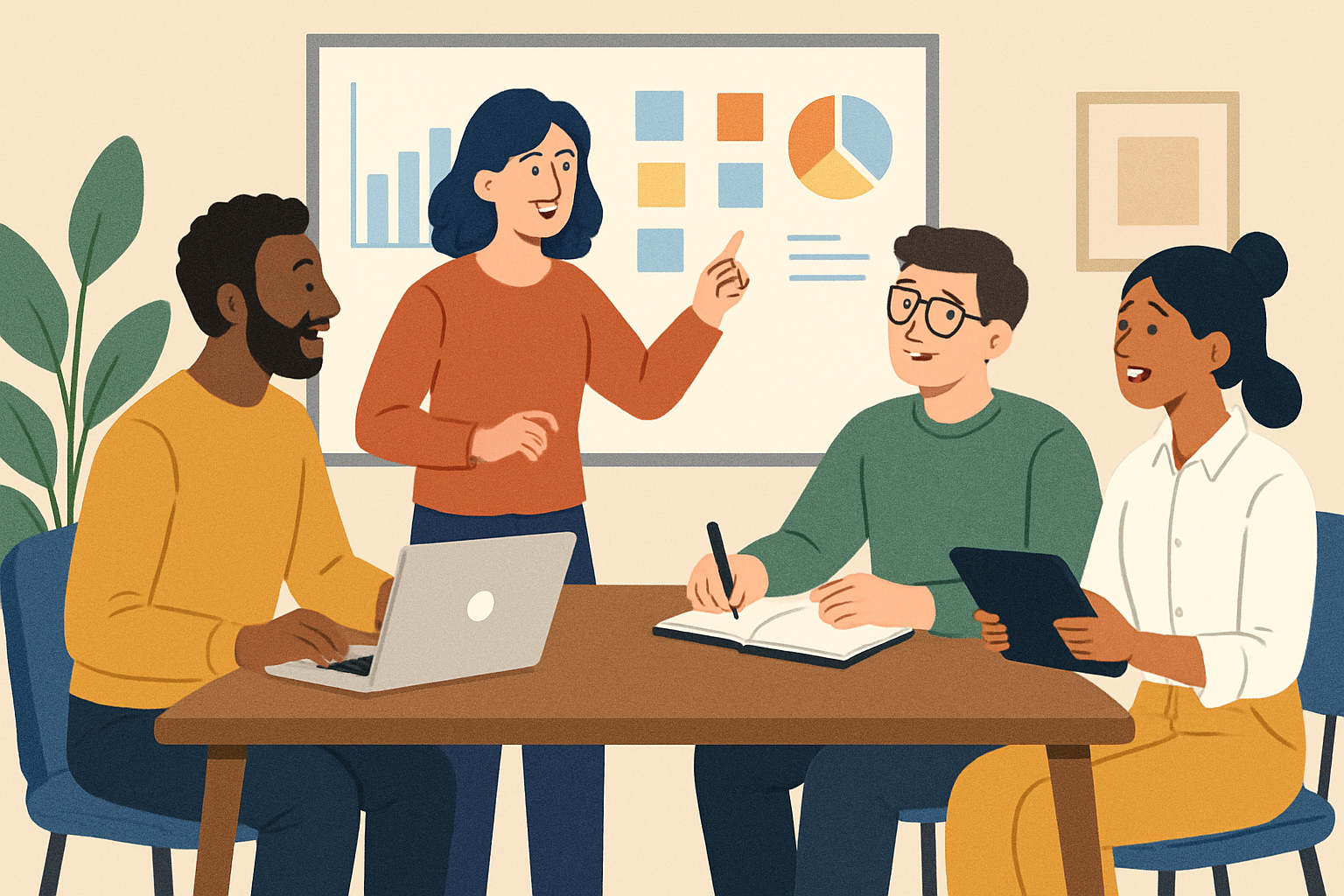
Think about group projects, student clubs, or even splitting chores with roommates. A popular idea says people won’t help unless someone forces them. But Elinor Ostrom shows that real life doesn’t work that way. In simple lab games where people can chip in to a shared pot, many still give something—often almost half—especially at the start. We also tend to give more when we believe others will reciprocate. That’s a big clue: trust and expectations matter.

What really boosts cooperation is talking face-to-face and being able to call out obvious free-riding. When people can look each other in the eye, they are more likely to plan, make promises, and keep them than when they only type. And when groups are allowed to nudge rule-breakers—even lightly at first—most folks stay on track. Think of a club where everyone agrees on small, fair consequences for skipping set-up duty, starting with a reminder, not a fine. That mix of conversation, plus gentle yet escalating sanctions, keeps things fair without turning the vibe hostile.

Ostrom also explains why some community rules work for years. Strong groups set clear boundaries (who’s in, who’s out), tailor rules to local realities, involve most members in making those rules, and choose their own monitors. They use light penalties first and settle disputes quickly and nearby, so misunderstandings don’t poison trust. Even bigger efforts—such as campus organizations or neighborhood projects—work better when small circles are nested within larger ones, each handling what it knows best. If you’ve ever seen a student association with committees that set their own schedules and budgets, you’ve seen this logic in action.

Here’s the practical takeaway for everyday life: start with a small, motivated core, make membership and expectations clear, co-create simple rules that feel fair, and agree on friendly, step-by-step consequences. Talk in person when you can. Keep a quick way to resolve small conflicts before they grow. And don’t always wait for outside authorities to fix things; sometimes top-down controls can actually weaken the helpful habits you’re trying to build. Begin locally, build trust, and let good norms take hold. That’s how classmates, neighbors, and teams turn “we should” into “we did.”

Reference:
Ostrom, E. (2000). Collective Action and the Evolution of Social Norms. Journal of Economic Perspectives, 14(3), 7–158. https://about.jstor.org/terms

Privacy Notice & Disclaimer:
This blog provides simplified educational science content, created with the assistance of both humans and AI. It may omit technical details, is provided “as is,” and does not collect personal data beyond basic anonymous analytics. For full details, please see our Privacy Notice and Disclaimer. Read About This Blog & Attribution Note for AI-Generated Content to know more about this blog project.

What Actually Makes Young People in Mexico Feel Happy?

You’re on the bus after class, scrolling WhatsApp, checking a meme on Instagram, and wondering if being “happier” is about more likes, more money, or just more sleep. Romero-Gómez and colleagues examined real data from Mexico to determine what matters most, using the national well-being survey. They found something simple yet powerful: most people report being fairly happy—an average of 8.45 out of 10, with about two-thirds falling within the 8–10 range. That’s a good baseline to start from and a reminder that many everyday lives already include plenty of reasons to feel okay.

According to Romero-Gómez et al., happiness isn’t one big thing; it’s a mix of your money and health situation, your mind, and your online connections. Messaging apps like WhatsApp and Telegram are an integral part of daily life for more than half of the people surveyed, while TikTok, Twitter, and Instagram are used less frequently in this sample. Picture a normal day: you swap voice notes with your family, share a quick update in a class group, and laugh at a short video. That small stream of connection helps—but it isn’t the main driver. In their model, social networks had a positive but modest link with happiness, while socioeconomic factors (how safe you feel, how you rate public services, your health, and the economy) did much more of the heavy lifting. Psychological strain, like stress, anxiety, or feeling down, pushed happiness in the opposite direction.

So, what’s useful day-to-day? First, care about the basics you can influence. If you’re juggling a part-time job and school, planning your budget, sleeping enough, and staying on top of a health check can pay off in how you feel. That aligns with the finding that better ratings of health, the economy, safety, and public services are associated with higher happiness. Safety and services are areas where many people feel less satisfied, which is important to consider when choosing a neighborhood, commute route, or campus service to use. Second, use your feeds like tools, not traps. A couple of chats that make you feel supported can help; doom-scrolling when you’re already anxious won’t. In the numbers, psychological factors had a clear negative impact, so noticing early signs—trouble concentrating, feeling nervous, and sadness that persists—and talking to someone is not just “mental health talk”; it’s practical happiness math.

Here’s the bottom line from Romero-Gómez and colleagues: start with the pillars, then add the polish. Socioeconomic factors show the strongest positive link with happiness; social networks add a small boost; psychological strain pulls it down. In their results, the model explained about a third of what makes people feel happier, which is a lot in real life. So yes, keep the group chat alive. Also, take that free clinic appointment, pick the safer bus stop, and set a bedtime you actually keep. Small moves add up. And if you’re having a rough stretch, that’s common, too—many people report stress or anxiety at least sometimes. Getting support is not a luxury; it’s one of the fastest ways to improve your mood this week.

Reference:
Romero-Gómez, D., Ahumada-Tello, E., Evans, R., & Castañón-Puga, M. (2024). Exploring the determinants of happiness in Mexico: The interplay of social networks, psychological well-being, and socioeconomic factors. Transactions on Energy Systems and Engineering Applications, 5(2). https://doi.org/10.32397/tesea.vol5.n2.636

Privacy Notice & Disclaimer:
This blog provides simplified educational science content, created with the assistance of both humans and AI. It may omit technical details, is provided “as is,” and does not collect personal data beyond basic anonymous analytics. For full details, please see our Privacy Notice and Disclaimer. Read About This Blog & Attribution Note for AI-Generated Content to know more about this blog project.